
A responsibility for the future
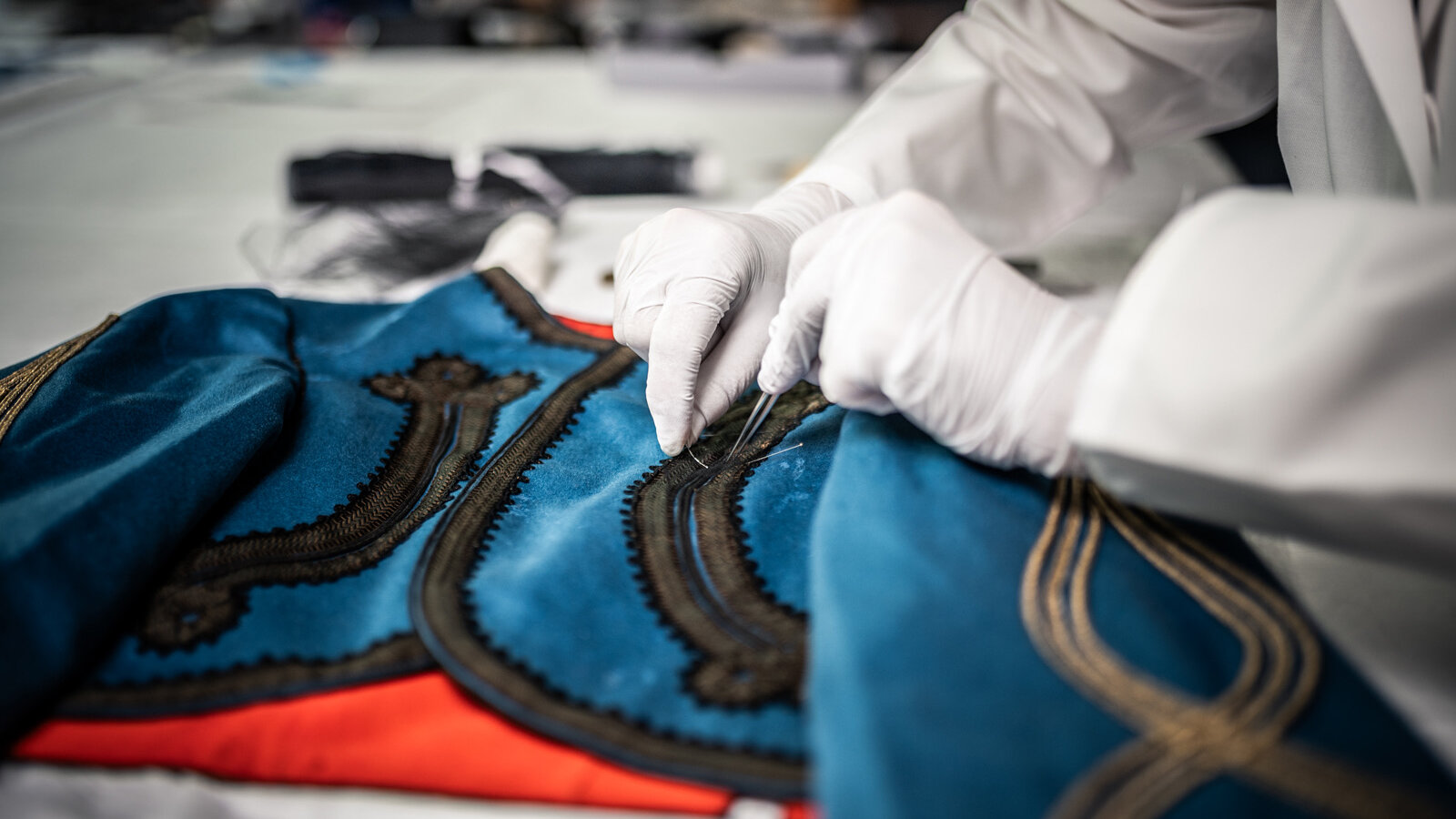
Whether a uniform, vehicle or painting – every object has a story to tell. To preserve its unique collection, the Military History Museum maintains a conservation and restoration department. It ensures that objects in the collection, whether on display or in storage, are preserved for the long term, and that they are properly conserved when on loan to other institutions.
High standards for the best possible results
The collection spans an enormous range. It includes fast attack craft, aircraft, vehicles, firearms of all kinds, armour, uniforms, flags, paintings, prints, documents, posters, certificates, photographs, medals and military artefacts. All these different objects and materials require specialist expertise.
The department employs conservators with both academic and practical training. They specialize in the restoration of paper, textiles and wood, as well as the conservation of technical objects. The museum has well-equipped workshops for this purpose.
The department’s core expertise lies in the conservation and restoration of museum objects. Conservation work is guided by the international ethical principles of the International Council of Museums (ICOM), the European Confederation of Conservator-Restorers’ Organisations (ECCO) and the German Association of Conservator-Restorers (VDR).
In all work on the objects, the primary aim is to preserve historical traces and physical integrity.


