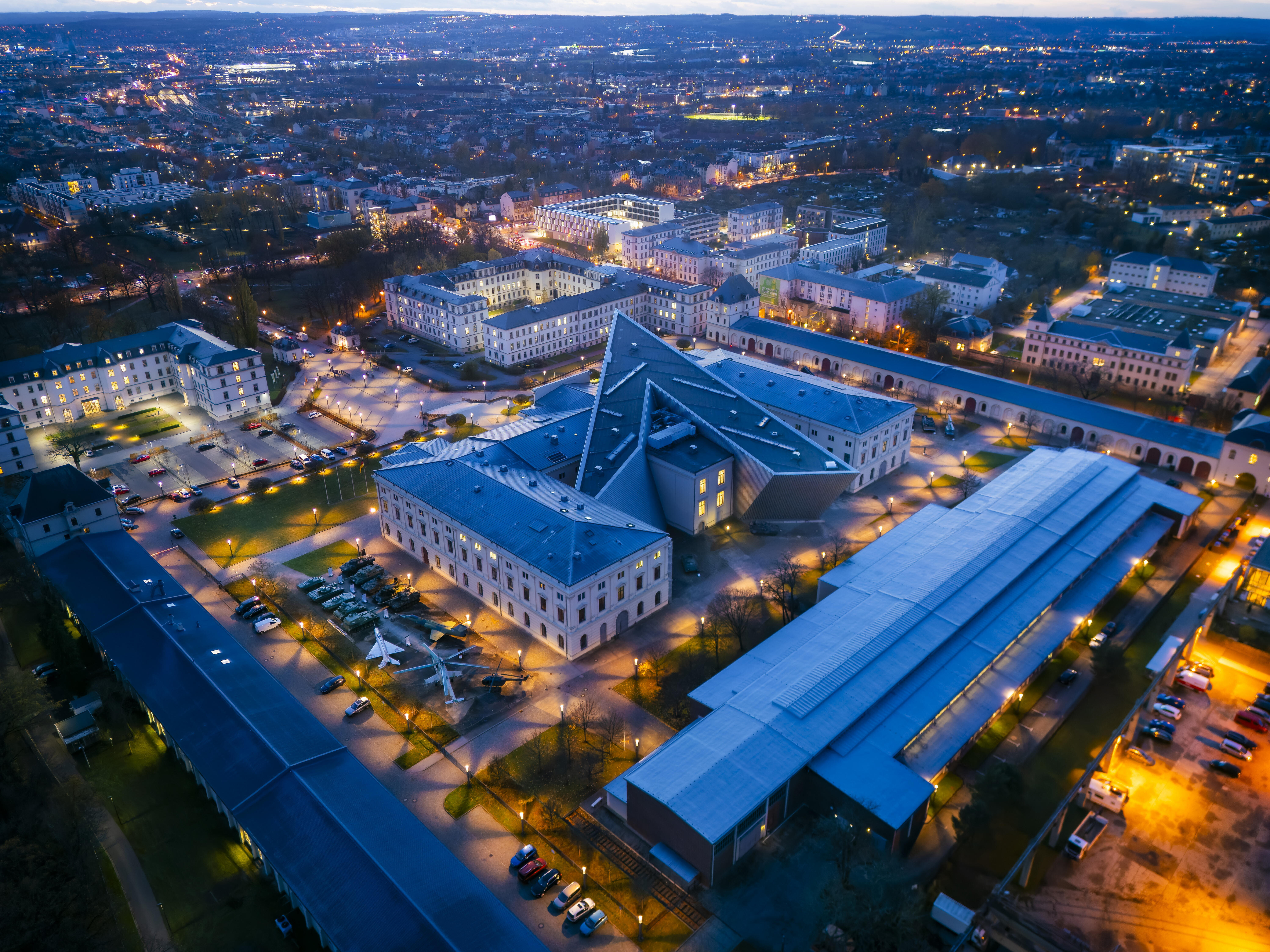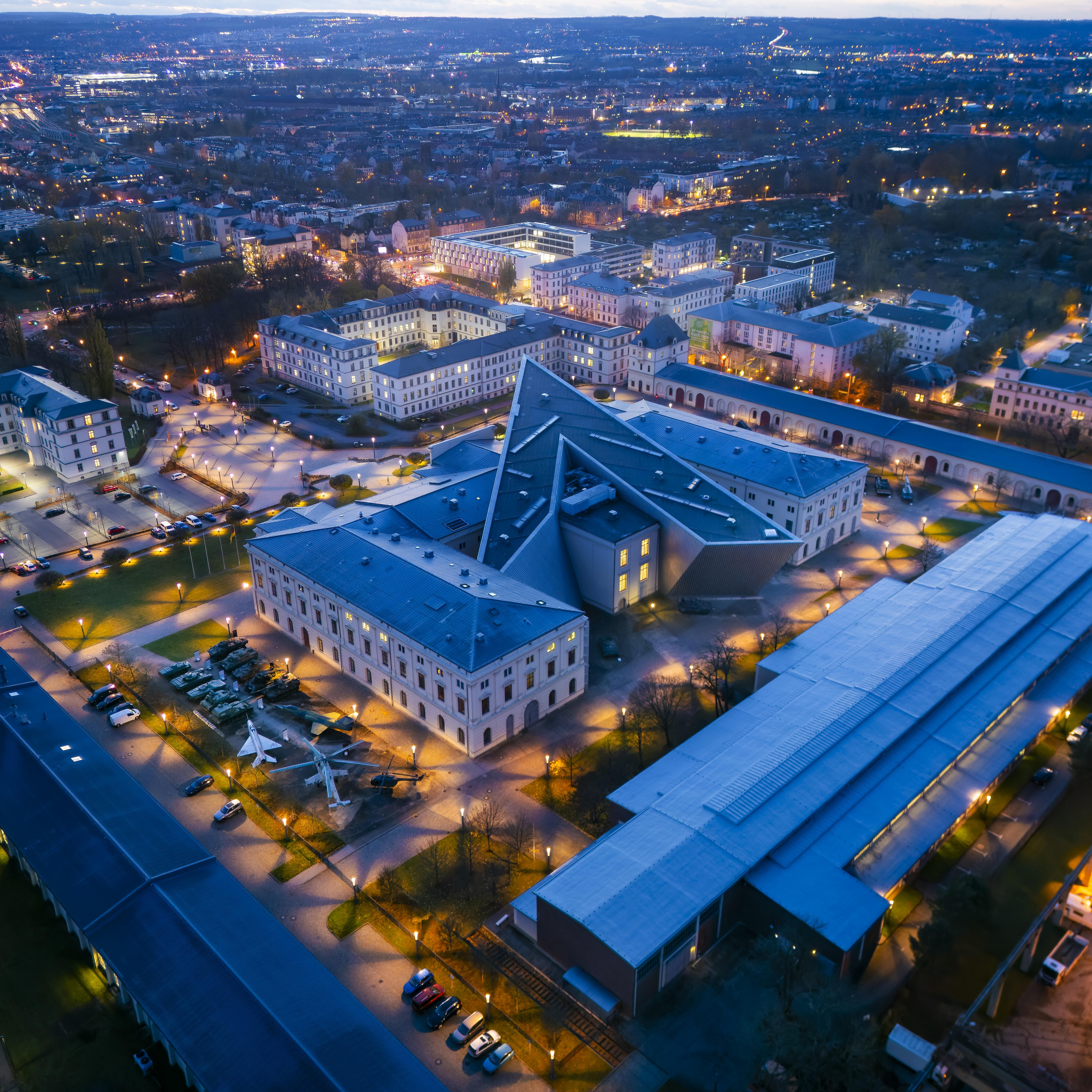
The Military History Museum illuminated at night.
Open copyright info

History of the museum

From the Saxon king to a brand new concept

The beginnings of the museum

The origins of today’s Military History Museum of the Bundeswehr in Dresden date back to 1559. At that time, the Electoral Saxon Armoury was established in the city centre, where the Saxon army stored weapons and war trophies.


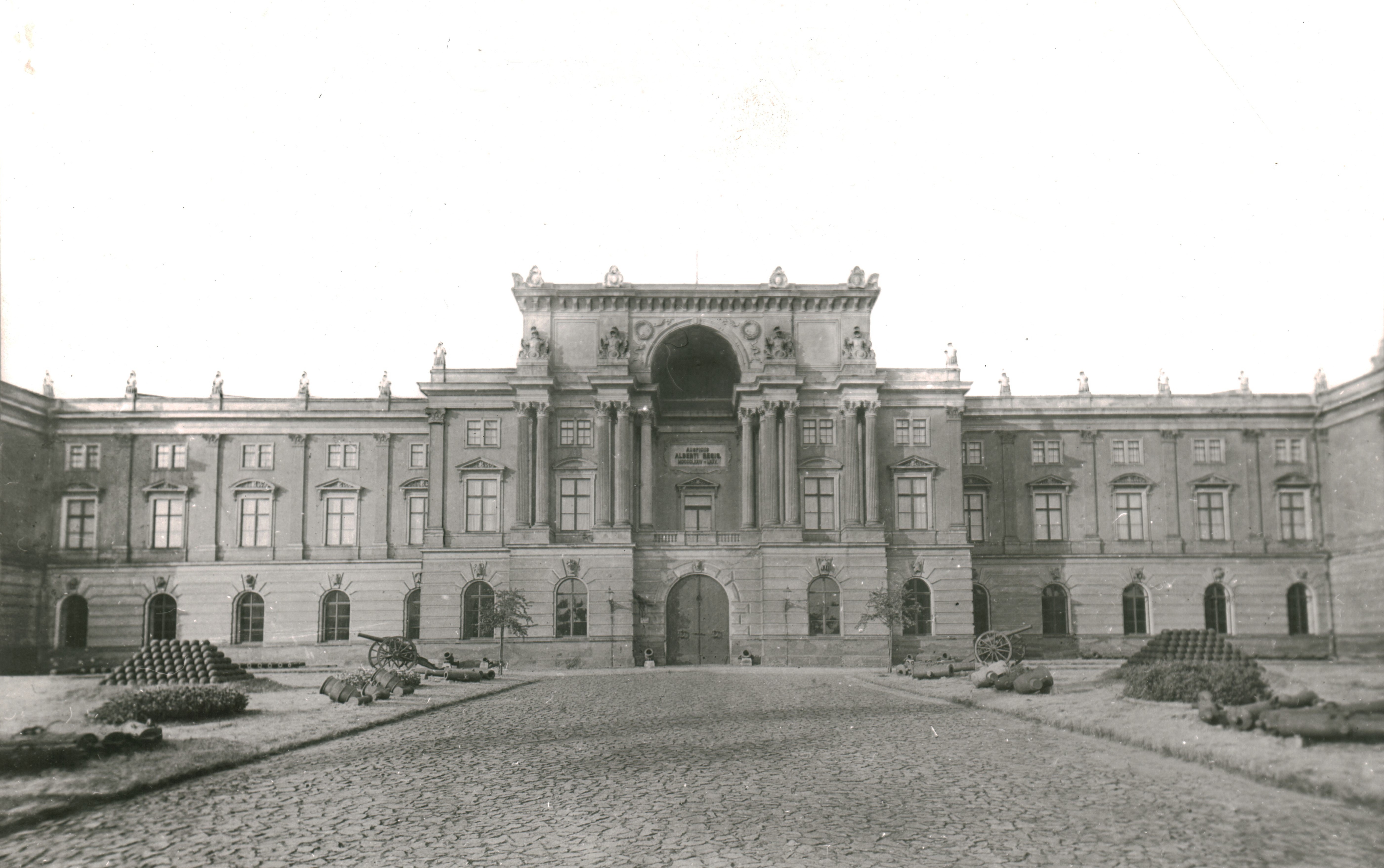
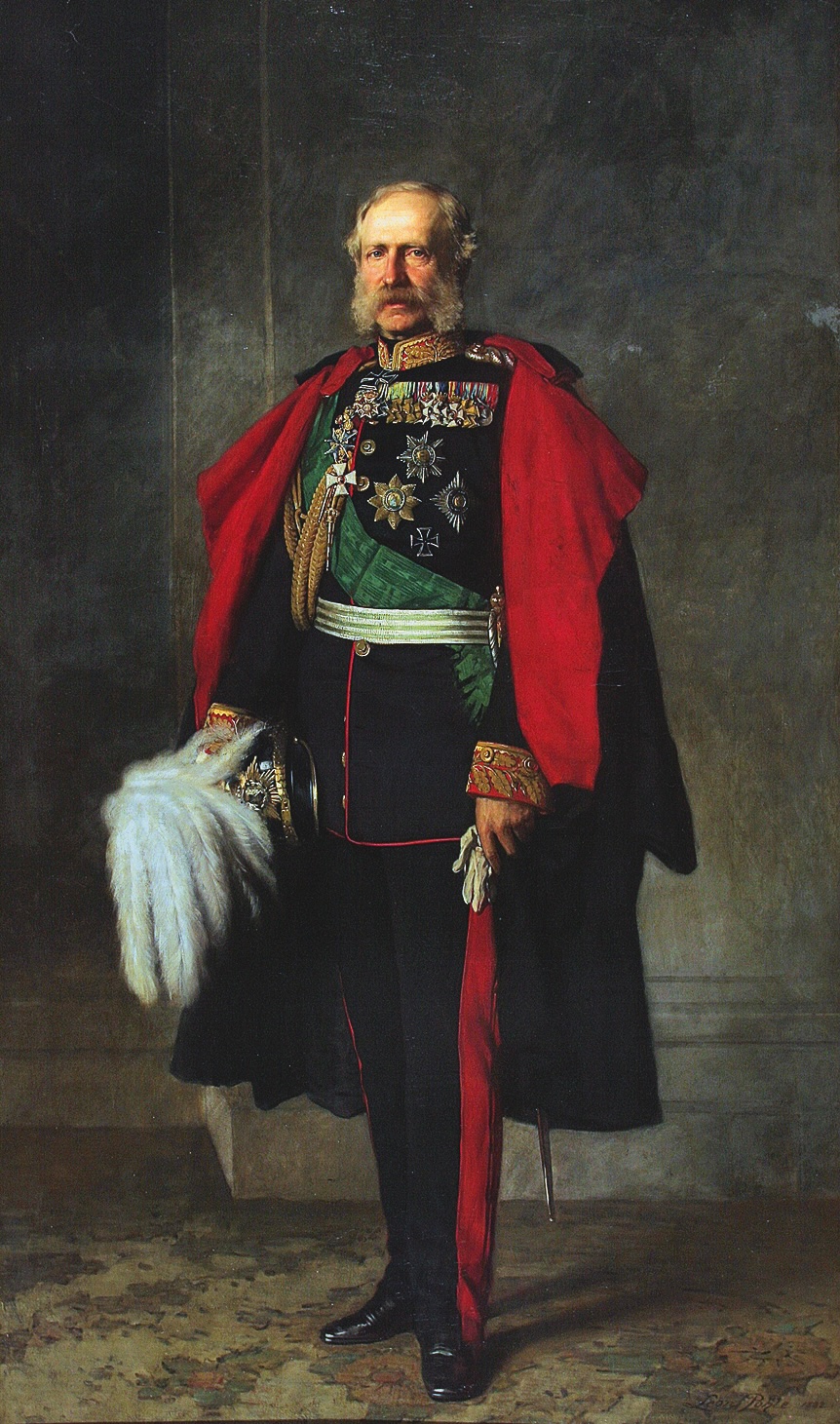
After the end of the Franco–Prussian War of 1870/71, a new, self-contained military complex was built outside the city gates and named after King Albert of Saxony (1828–1902). Known as Albertstadt, it included infantry barracks, ammunition depots, a fortress prison, workshops, a garrison church and a central arsenal building – which today houses the Military History Museum of the Bundeswehr.

The two collections

The remaining holdings of the Armoury were transferred to the main arsenal building, which was completed in 1876/77. The collection was further expanded with significant additional holdings.

Of particular note is the Thierbach Rifle Collection – a unique collection of rifle mechanisms owned by the armourer Moritz Thierbach. In May 1897, the museum was opened to the public under the title Collection of Historical Weapons and Models in the Arsenal. In 1914, it was merged with Ludwig Wurmb’s army collection – a collection of artworks depicting the Saxon army – to form the Royal Saxon Army Museum.


The institution, which was renamed the Saxon Army Museum after the First World War, gradually reopened from 1923 onwards and continued to present an uncritical display of military artefacts. Following the Nazis’ rise to power, the museum was placed under the authority of the Director of Army Museums from 1939 and renamed the Dresden Army Museum in 1942.

Civilian use after the war

The museum building was not hit during the bombing of Dresden in February 1945. After the end of the war, part of the collection was transported to the Soviet Union. In addition, military museums were prohibited in occupied Germany. This meant that the fate of the arsenal building as a site of military history remained uncertain for a period.

In 1946, the Dresden Municipal Collections took over the undamaged building and used it for several years as a civic events venue. In addition to Christmas markets and flower shows, the General German Art Exhibition was held there in autumn 1946, featuring 600 works of art from all over Germany.

In 1957, one year after the founding of the National People’s Army (NVA), the East German Ministry of National Defence decided to establish a permanent exhibition on the history of the NVA. It was opened in the Marmorpalais (Marble Palace) in Potsdam in March 1961.

Reopening as the Army Museum of the GDR

From 1965 onwards, the NVA and the Political Main Administration, which oversaw the museum, had the arsenal building refurbished for exhibition use. In March 1972, it opened as the Army Museum of the GDR with a completely revamped exhibition that was highly modern for its time, featuring almost 6,000 exhibits. The museum in Dresden enjoyed a good reputation both nationally and internationally and joined numerous international museum networks.

In 1990, at the request of its employees, the Army Museum of the GDR was renamed Military History Museum Dresden and taken over by the Bundeswehr. In accordance with the Concept for Museums in the Bundeswehr issued by Minister of Defence Volker Rühe, the Military History Museum became the lead museum within the Museum and Collection Network of the Bundeswehr in 1994, replacing the previous lead museum in Rastatt, Baden-Württemberg.

Redevelopment

In the early 2000s, a team of experts began developing a new curatorial concept for the museum, accompanied by an international architectural competition. The aim was to devise a completely new concept and bring the ageing museum building and its rich collections into the present day. Germany’s military and wartime past was to be presented in a way that would engage visitors from both Germany and abroad.


The competition was won by the celebrated Polish-American architect Daniel Libeskind. With his idea of a wedge rising above the historic Wilhelminian-style building, he set radically new standards for the museum’s external appearance. His aim was to enable a critical, nuanced and honest examination of the military, war and society from the Middle Ages to the present day. People were to be understood both as subjects and as objects within a comprehensive cultural history of violence. The result of many years of work was the grand opening of the redeveloped museum in October 2011.

Architecture

If you’re interested in finding out more about the new building, you’ll find further information here.

Focus on current topics

The years following the reopening were marked by major special exhibitions on the First World War, the memory of the Battle of Stalingrad and the founding of the German Empire. The programme also included numerous photography exhibitions, smaller gallery exhibitions and artistic interventions addressing both historical and contemporary themes. Increasing attention is being paid to Germany’s military missions during the Merkel era and to the resulting turning point for the Bundeswehr.

Permanent exhibition

Our permanent exhibition features almost 10,000 exhibits. Find out more about the Military History Museum's exhibitions.

Over the next few years, the museum plans to fundamentally redesign its permanent exhibition while retaining its existing concept – continuing to foster public debate on the role of war and the military in the past, present and future.