
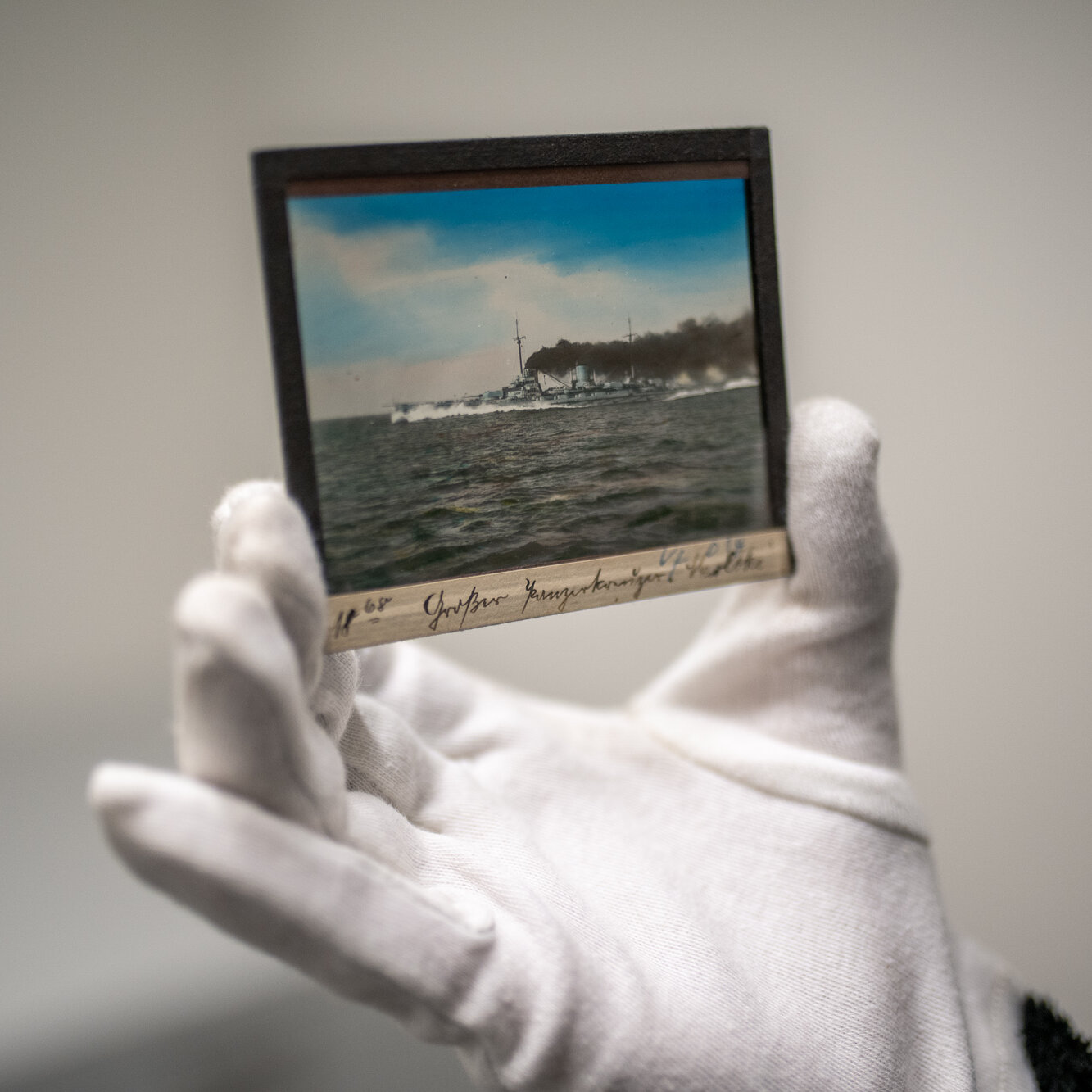
Photographs that tell stories
A photograph captures a moment in time – yet it often tells a story that goes far beyond what is visible. The photographic collection includes historical (above all military-historical) photographs, negatives and slides dating from the mid-19th century to the present day.
The holdings rank among the most important collections relating to German and international military history. The focus is on German armies since the nineteenth century. Due to the development of the collection, the holdings on the National People’s Army of the GDR are particularly extensive and largely reflect official perspectives.
1. Official holdings
These holdings include photographs produced by military units, military institutions, press agencies and other organizations. They were taken to preserve visual information, but were often influenced by propaganda. The surviving material is uneven, with a particular focus on the Cold War and the GDR. The photographs by Soviet war correspondent G.G. Samsonov, for example, document the advance of the Red Army during the final two years of the Second World War, culminating in the capture of Berlin in May 1945. The photographic estate of Willy Rossner documents the end of the war in 1945 and the subsequent reconstruction of Dresden.
Particularly extensive is a coherent body of material documenting the history of the National People’s Army and the GDR border troops from their founding to their dissolution in 1990. By contrast, the holdings relating to the West German Bundeswehr are comparatively small and have only been increasing for a few years, for example through the transfer of photographic material from disbanded units.
2. Private photographs
Another group consists of photo albums and groups of amateur photographs – ‘snapshots.’ These were made possible by inexpensive cameras and film, the rise of the illustrated press, and technical developments. They were originally created as personal memories. There are numerous examples, especially from the First and Second World Wars. In recent years, such private holdings have accounted for the majority of new acquisitions.
3. Military documentation
Numerous photographs in the collection depict military vehicles, weapons and equipment. They were produced for internal documentation purposes within the armed forces, for example for service manuals and regulations.


